Stage 1
Vision
The objective of Stage 1 is for teams to reflect and pray through what God is calling them to do — their God-given vision. Teams introduce themselves to the learning community, explore what it means to form a new church community, and are challenged to develop their personal lifestyle of mission.
By the end of this stage, each team should have a clear and emerging sense of their vision, a set of actions to pursue, and the beginnings of a safeguarding structure in place.
Stage journey
Note this arc shows the intended journey through this stage. On occasion there may be reason to move them (e.g. Oversight Induction can happen any time in the first 3 months).
1: Gathering 1
Vision
2: Oversight
Oversight Induction
3: Thrive in Five
Ep1: Prayer Walking
4: Thrive in Five
Ep2: Finding your Points of Connection
5: Mid Stage 1
Safeguarding in New Church Communities
6: Thrive in Five
Ep3: Praying for the Lost
7: Mentoring
Mentor Session 1
8: Thrive in Five
Ep4: Time Management
key leadership questions to ask in this stage
Are the teams referring back to their action plans?
Check that teams are referring back to the actions they set at Gathering 1 — not treating them as a one-off exercise.
Are the teams praying and listening to God about their vision?
Teams should be praying and journalling regularly, documenting what they are hearing from God and seeking to refine this into a vision.
Note: This is the primary work of Stage 1. If it is not happening, the vision sessions at Gathering 2 will have little to build on.
Teams should be using the Place Discernment Tool to explore the context God has called them to. Check with mentors that this is in progress (after they have been appointed).
Is their vision clarifying?
Teams should be moving from a general sense of calling towards a clearer emerging vision — even if still early and poorly formed. Mentors should be helping to shape this.
Is appropriate safeguarding in place?
After Mid Stage 1, each team leader must confirm they have agreed a safeguarding policy with their oversight minister, submitted a DBS check, and completed appropriate leader safeguarding training.
Note: The hub must confirm to its Myriad Partner that this information has been collected and stored before teams progress to Stage 2.
Check with oversight ministers that they are satisfied with the safeguarding arrangements in place for each new community.
Role Legend
Owns delivery
Promotes prayer for and within teams.
Logistics and Comms
Session delivery
Coaches the hub team
Supports the team leader
Provides missional, pastoral and safeguarding oversight
About
Gathering 1 (G1) kicks off the first stage of the Myriad Pathway.
Preparation
Organize the rest of your event team
Who will be responsible for welcome, hospitality, worship and audio/visual?
Have you received your A1 Action Plan paper copies? Do you have your check-in notices ready? What visual elements have you prepared that will draw attention to the building blocks?
Message Templates
Dear [FIRST NAME],
We are excited to invite you to the first Gathering of the Myriad Pathway! This is the start of an important 2.5-year journey together and we can't wait to begin it with you.
What to expect:
Gathering 1 marks the beginning of Stage 1: Vision. Over the weekend you will:
• Introduce yourself and your team to the wider learning community
• Explore what it means to form a New Church Community
• Hear from God for your vision and for the place you're called to
• Develop a set of actions to guide you over the next six months
This gathering is built around shared learning, worship, prayer and honest conversation — not a lecture or a course. What you bring matters.
Date: [GATHERING 1 DATE — FRIDAY TO SATURDAY]
Venue: [VENUE NAME AND ADDRESS]
Arrival: Friday evening from [ARRIVAL TIME] for a 7:30pm start
Finish: Saturday approximately 3:30pm
Cost: [COST, IF ANY — OR 'FREE']
We'll provide you with handbook so you can take notes over the weekend but feel free to bring your own notebook too. Come ready to engage fully over the weekend.
Please confirm your attendance by [RSVP DATE] by replying to this email or contacting [HUB ADMIN NAME] at [ADMIN EMAIL / PHONE].
We are praying for you as this exciting missional journey begins.
Warm blessings,
[HUB LEADER NAME]
[HUB NAME]
Subject: Reminder: Myriad Gathering 1 is coming up — [DATE]
Dear [FIRST NAME],
Just a reminder that Gathering 1 is coming up soon! We're looking forward to welcoming you and your team.
Date: [GATHERING 1 DATE]
Venue: [VENUE NAME AND ADDRESS]
Friday start: 7:30pm (please arrive by [ARRIVAL TIME])
Saturday finish: Approx. 3:30pm
As you prepare, we encourage you to spend a little time reflecting on where you and your team are right now in your journey of forming a new church community — you'll be sharing this with the group on Friday evening.
There's no need to have anything polished or prepared — this is a community of fellow learners and everyone starts from where they are. Simply come as you are.
If you have any questions or your plans have changed, please do get in touch with [HUB ADMIN NAME] at [ADMIN EMAIL / PHONE].
See you very soon!
[HUB LEADER NAME]
[HUB NAME]
content and At the Gathering
Here is the content that you will use at the gathering.
G1.0 Welcome and Worship
Use these slides to open the Gathering, including an introduction to the essential building blocks.
Videos:
G1.1 Growing in Devotion to Jesus
This opening devotion frames the whole activity of forming new Christian communities as on the foundation of Jesus, who uses ordinary people rather than large scale programmes.

G1.2 Where are we up to?
This session helps introduce teams to one another, including individuals but more importantly their sense of God's calling to form a new Christian community.
G1.3 What’s a New Christian Community?
This session defines a Christian community (i.e. a church) as having five key elements.
G1.5 Missional Lifestyles
This session encourages each individual and team to have intent to share the Gospel, rather than run a programme of events.
G1.6 Hearing God for your Place
This short session introduces an easy tool for prayer.
Resources:
- Place Discovery Resource - print one paper copy per team. The Hub Leader can decide if/when to ask teams to report back on how they used the tool.

G1.7 Vision & Prayer Practice
A God-given vision is the starting point for a new Christian community. In this session we introduce vision, then get people working on their own vision through prayer and conversation.
Video Links
G1.8 Rhythms of Review & Action Planning
This session helps teams work out how they will ensure they are making progress towards their vision. It then moves onto action planning, which is the culmination of the gathering.
Resources
- Sarah Sharpe from Connect Gamston
- A1 Action Plan Templates - print one paper copy per team. Many local or online print shops can produce these (look for "plan printing" such as a Plotbot).

G1.9 Roundup
This closing session wraps up the gathering with important notices:
- Date of Mid Stage 1
- Date of Gathering 2
Please also do the review - this enables us to keep learning and make improvements.
G1 Catch Up
Did any of your teams miss the first gathering? We permit teams to join during Stage 1, but must be present for G2 onwards. The Hub leader should use these slides to enable late-joining teams to catch up. If the teams also miss the Mid Stage session on Safeguarding, they should complete that too.
Specific Actions at the gathering
Individuals should check in using the QR code. This will send a follow up email towards the end of the gathering asking for participant feedback. You can see the data in your dashboard. If a participant can't do the check in themselves, get one of the Welcome Team to do it on their behalf so everyone checks in.
Take good photos of each team's action plans. These will be your only record as teams will take the paper away with them.
Get everyone (or as many as possible) into the WhatsApp group. This will become the easiest way you can distribute information. You can do this through the Check In form, through the Welcome session, or manually adding people.
Hub Leader / Administrator - please complete the feedback form.
Hub Partner - please complete the feedback form.
After the Gathering
Send a copy of the action plans in your group WhatsApp group.
Send the Stage Handbook follow up messages to oversight ministers.
Complete the debrief.
Finalise the Oversight Induction if not already done.
Complete safer recruitment of Mentors before the Mid Stage meeting and share the training and induction resources with them. See the Mentoring tab.
Message templates
Subject: Thank you — Gathering 1 next steps
Dear [FIRST NAME],
What a wonderful start to our Myriad journey together! Thank you so much for joining us at Gathering 1. It was a real privilege to hear from each team, to worship and pray together and to begin to sense what God is doing across all of our contexts.
Key things to carry away:
1. Your action plans — You set 3–5 key actions at the end of the gathering. Please review them with your team and begin putting them into practice. These will be reviewed at the Mid Stage meeting and at Gathering 2.
2. Vision — Spend time as a team praying and journalling together about your God-given vision. The session on 'Hearing God for Your Place' introduced a Place Discernment Tool to help you explore your context over the coming months. We encourage you to begin using it.
3. Missional Lifestyles — You were challenged to identify a new missional habit. What will that look like for you? We encourage you to hold one another accountable to this.
4. Oversight — Please ensure you have a regular meeting in the diary with your oversight minister. Send them a copy of your action plan.
Mid Stage 1: [MID STAGE DATE AND ZOOM LINK]
Gathering 2: [GATHERING 2 DATE AND LOCATION]
If there is anything we can support you with, please don't hesitate to get in touch. We continue to pray for you all.
With every blessing,
[HUB LEADER NAME]
[HUB NAME]
Subject: Myriad Pathway — Gathering 1 has taken place: Stage 1 update for oversight ministers
Dear [OVERSIGHT MINISTER NAME],
I am writing to let you know that Gathering 1 of the Myriad Pathway took place on [DATE]. I hope this message finds you well.
This email is to keep you informed about what [TEAM LEADER NAME] and their team have been exploring, and to give you a sense of how you can best support them over the coming months.
What was covered at Gathering 1
The theme of Stage 1 is Vision. At Gathering 1, teams:
- Introduced themselves and their communities to the wider learning community
- Explored what constitutes a new church community — and were challenged to ensure that what they are building has the full shape of church, not just a community project or bridge activity
- Were challenged to develop their personal lifestyle of mission and evangelism
- Spent time listening to God for their place — using a Place Discernment Tool to begin exploring their context prayerfully
- Set 3–5 key actions to pursue over the next six months that will help them realise their God-given vision
Teams will be praying and journalling throughout this stage, seeking to refine what they are hearing from God into a clear vision. By the time they reach Gathering 2, we are aiming for each team to have a clear and emerging sense of that vision.
How you can support [TEAM LEADER NAME] in this stage
As their oversight minister, your role in Stage 1 is to help the team leader identify and shape their vision. These questions may be helpful as you meet with them:
- Are they praying and listening to God, particularly about their vision?
- Are they working on clarifying what they sense God is calling them to?
- Are they clear that they are forming a new Christian community — not something else?
- How are they practising living missionally day to day?
- Are they referring back to the actions they set at the gathering?
Safeguarding — action required
After Mid Stage 1 (which focuses on safeguarding in new church communities), each team leader will be asked to confirm that they have:
- Agreed a safeguarding policy with you as their oversight minister
- A current DBS check in place
- Completed appropriate leader safeguarding training
We will be in touch after Mid Stage 1 to follow this up. In the meantime, it would be helpful if you could begin a conversation with [TEAM LEADER NAME] about the safeguarding arrangements for their community.
Oversight Induction and Training
Please also remember that the Induction is coming up:
[INDUCTION DATE AND LOCATION]
This will clarify your particular role as an oversight minister. If you've not experienced this kind of role before, you may also be interested in a short training course that Myriad freely provides: myriad.church/what-we-offer/oversight-pathway
The Stage 1 Handbook
Please take time to read the Stage 1 Handbook, which is designed for oversight ministers and mentors and gives more detail on what teams are working through and the key things to look out for in this stage. I hope you find it useful.
If you have any questions or concerns, please don't hesitate to get in touch.
With every blessing,
[HUB LEADER NAME]
[HUB NAME]
[EMAIL / PHONE]
Stage Journey
Thrive in Five is a series of short video inputs with knowledge gleaned from a wide audience of experienced missional and church planting practitioners. Each video is carefully designed to build knowledge on a particular theme, introducing five key points that the viewer can immediately apply to their context. Each video comes with some text that you can simply copy and paste into your Hub's WhatsApp group to generate some conversation and shared learning amongst your community.
Four videos are provided to use in each stage, two before the Mid Stage meeting and two after. They should not be used in the same month as the Gathering, but the exact timing is up to the Hub Leader and Administrator.
01
Prayer
Hearing God for Your Place
WhatsApp Message:
[LINK]
Walk Before You Build
02
Mission
Finding Points of Connection
WhatsApp Message:
[LINK]
Your Bridge Into Every Room
03
Prayer
Praying for the Lost
WhatsApp Message:
[LINK]
Names on Your Heart
04
Team & Life
Managing Time Well
WhatsApp Message:
[LINK]
Bi-Vo and Burning Out? Not Today
ABOUT
The Mid Stage 1 meeting is an online gathering lasting approximately 2 hours. In addition to reviewing action plans and team updates, the focus is on safeguarding within new church communities — understanding why this requires particular attention in the new church context and how to develop a proactive culture of safeguarding.
Message Templates
Subject: Mid Stage 1: Safeguarding in New Church Communities — [DATE]
Dear hub teams,
We are looking forward to seeing you at our Mid Stage 1 online gathering — a chance to reconnect as a learning community, share how things are going and look at an important topic for your new church communities.
When: [DATE AND TIME]
Zoom Link: [ZOOM LINK]
Duration: Approximately2 hours
During this gathering we will:
• Hear updates from each team on how your actions are progressing
• Explore the theme of Safeguarding in New Church Communities
Safeguarding in a new church community is different from established church contexts. Because your community is developing and changing — new people joining, different meeting spaces, evolving activities — your safeguarding practice needs regular and careful attention. We'll look together at what this means in practice.
Before the meeting, please review your action plans: Where have you got to? What has worked well? What is still a work in progress?
Our next in-person gathering is on [GATHERING 2 DATE]. We continue to pray for you all, so do let us know if there is anything we can help you with.
Looking forward to seeing you all,
[HUB LEADER NAME]
[HUB NAME]
Subject: Tonight: Mid Stage 1 — join us online at [TIME]
Hi everyone,
Looking forward to seeing as many of you as possible this evening for our Mid Stage 1 gathering online.
We'll have time for team updates, report back, input on Safeguarding in New Church Communities, team discussion and prayer.
Before you join, do review your action plans: Where have you got to? What has happened? What worked well? What haven't you managed? What has been difficult? What is still a work in progress?
Zoom link: [ZOOM LINK]
Time: [START TIME]
See you this evening!
[HUB LEADER NAME]
Dear [FIRST NAME / team leader],
Thank you for joining us for Mid Stage 1 — it was great to hear how each team is progressing and to look together at the important subject of safeguarding. Here is the resource we referred to and here is a copy of the slides. And to help your team's future conversations, here are the nine statements/questions that you looked at:
- What structures have you got in place?
- Who has safeguarding oversight for your plant?
- Who can help you adapt safeguarding policies for your context?
- Where do safeguarding conversations fit into your team meetings?
- Accept that relationships sometimes break down when you have to report a safeguarding concern.
- Do you make decisions together as a team?
- Don’t let things slide for fear of ‘rocking the boat’.
- Nip it in the bud! Regular small conversations may prevent a need for a big intervention.
- Do you have an existing partnership with your safeguarding lead? Don’t wait until it starts to rain to mend your roof!
As we discussed, safeguarding in a new church community requires ongoing attention. Because your community is likely evolving — new people joining, changing activities, different venues — your safeguarding culture must be regularly reviewed and adapted.
Action required — please complete by [DATE]:
We are asking each team leader to confirm the following to us and to your oversight minister:
1. That you have checked and agreed with your oversight minister the safeguarding policy and practice/process you are using (or proposing to use).
2. Please send evidence of your DBS check to [HUB ADMIN NAME / EMAIL].
3. Please send evidence of your appropriate leader safeguarding training.
If you are still in the planning phase, please send a proposed outline of how you see safeguarding working in your context. The important thing is that all team leaders have had this conversation with their oversight minister.
Safeguarding training is available through:
We need to confirm to our Myriad partner that this information has been collected, so thank you in advance for your prompt response.
Gathering 2: [DATE, VENUE AND TIME]
We're praying for each of you as you continue this work.
With every blessing,
[HUB LEADER NAME]
[HUB NAME]
Content
Safeguarding in New Church Communities
As new church communities are often developing and changing more quickly than some traditional models, teams should consider how they will keep reviewing and adapting their practice in line with their oversight structure.
Following this Mid Stage, each team leader should confirm with the hub leader that they have met and agreed with their oversight that everything is in place for safeguarding; including training, checks and that all policies are in line with their denomination or oversight structure. The resource below should be shared with teams after the meeting.
Resources
Guide
Mid Stage 1 Programme
Content
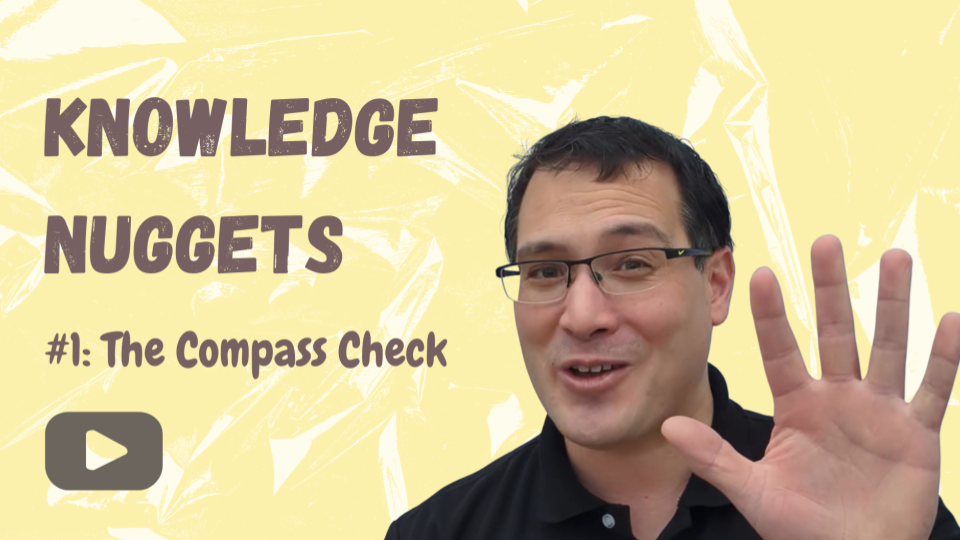
Knowledge Nugget: The Compass Check
Show this short video at the Mid Stage meeting as a gentle way to upskill teams and remind them about the need to track their progress towards their God-given vision.
After the Mid Stage Meeting
Send the follow up message to team leaders
Send the follow up message to Oversight Ministers and check that you receive satisfactory responses.
Message templates
Dear [FIRST NAME / team leader],
Thank you for joining us for Mid Stage 1 — it was great to hear how each team is progressing and to look together at the important subject of safeguarding. Here is the resource we referred to and here is a copy of the slides. And to help your team's future conversations, here are the nine statements/questions that you looked at:
- What structures have you got in place?
- Who has safeguarding oversight for your plant?
- Who can help you adapt safeguarding policies for your context?
- Where do safeguarding conversations fit into your team meetings?
- Accept that relationships sometimes break down when you have to report a safeguarding concern.
- Do you make decisions together as a team?
- Don’t let things slide for fear of ‘rocking the boat’.
- Nip it in the bud! Regular small conversations may prevent a need for a big intervention.
- Do you have an existing partnership with your safeguarding lead? Don’t wait until it starts to rain to mend your roof!
As we discussed, safeguarding in a new church community requires ongoing attention. Because your community is likely evolving — new people joining, changing activities, different venues — your safeguarding culture must be regularly reviewed and adapted.
Action required — please complete by [DATE]:
We are asking each team leader to confirm the following to us and to your oversight minister:
1. That you have checked and agreed with your oversight minister the safeguarding policy and practice/process you are using (or proposing to use).
2. Please send evidence of your DBS check to [HUB ADMIN NAME / EMAIL].
3. Please send evidence of your appropriate leader safeguarding training.
If you are still in the planning phase, please send a proposed outline of how you see safeguarding working in your context. The important thing is that all team leaders have had this conversation with their oversight minister.
Safeguarding training is available through:
We need to confirm to our Myriad partner that this information has been collected, so thank you in advance for your prompt response.
Gathering 2: [DATE, VENUE AND TIME]
We're praying for each of you as you continue this work.
With every blessing,
[HUB LEADER NAME]
[HUB NAME]
Subject: Myriad Pathway — Mid Stage 1 has taken place: Safeguarding update for oversight ministers
Dear [OVERSIGHT MINISTER NAME],
We've just completed Mid Stage 1 of the Myriad Pathway, in which we introduced Safeguarding as an essential part of forming any new church community. Each team leader has now been asked to confirm that they have:
- Agreed a safeguarding policy with you as their oversight minister
- A current DBS check in place
- Completed appropriate leader safeguarding training
Please can you let me know when you have agreed this with the team leader?
Oversight Training
Please also remember that Myriad provides a free short training course for those of us who might be new at oversight and want to upskill: myriad.church/what-we-offer/oversight-pathway
If you have any questions or concerns, please don't hesitate to get in touch.
With every blessing,
[HUB LEADER NAME]
[HUB NAME]
[EMAIL / PHONE]
About
In this first Stage of the Myriad Pathway, the list of mentors is finalised and each team leader is paired with a mentor from Mid Stage 1 onwards so they can commence the mentoring relationship.
It is therefore expected that each team leader will attend G2 having had one mentoring session.
Pairing Mentor and Mentee
The best mentor match is relational and contextual, not primarily a skills or seniority match. You are looking for someone genuinely a few steps ahead of the planter — close enough to the ground to remember what this season feels like, far enough along to have perspective the planter doesn't yet have.
Things to consider when matching:
- Proximity to planting — someone who has pioneered, even imperfectly, will instinctively grasp what the planter is navigating. A highly experienced denominational leader can be too far removed from the coalface to ask the questions that actually help.
- Context — a mentor with only inherited church experience may struggle with the particular ambiguities of forming something new.
- Temperament and rapport — there needs to be enough natural chemistry for honesty to flow in both directions.
- Power dynamics — avoid matching a planter with their own line manager or anyone who holds formal accountability over them. It will inhibit the openness the relationship depends on.
- Practical factors — gender, life stage, denominational background and geography may all be worth weighing depending on the planter's situation.
If you are uncertain between two possible mentors, trust your instinct about who will ask the better questions rather than who has the more relevant experience. A good question at the right moment is worth more than any amount of knowledge.
Subject: Welcome to the Myriad Pathway — your role as a mentor
Dear [MENTOR NAME],
Thank you so much for agreeing to be a mentor on the Myriad Pathway. We are genuinely grateful — good mentoring makes an enormous difference to the team leaders we work with, and we believe you have a great deal to offer.
This email gives you an overview of what being a Myriad mentor involves, and what we need you to do before we pair you with a mentee.
What is the Myriad Pathway?
Myriad is a 2.5-year learning pathway that trains and supports team leaders who are forming new church communities. It is run by hubs — local teams of experienced leaders — and brings together cohorts of planters for five six-month stages, each beginning with a residential gathering.
Mentors play a vital role in the pathway. Each team leader is assigned a mentor after the first mid-stage meeting — an experienced missional or church leader who is at least a few steps ahead of where the planter is. The mentor's role is to walk alongside the planter as a trusted, experienced voice throughout the remainder of the pathway.
What does a Myriad mentor do?
In summary, your role is to:
- Meet with your mentee twice in each stage of the pathway — they will contact you to arrange these meetings, as they drive the relationship
- Listen well, ask good questions and help them reflect on what God is doing in them and through them
- Engage with their action plans — which you will receive after each gathering — so you can ask informed and focused questions
- Receive a Stage Handbook and Stage Info Pack at the start of each stage, so you have a clear sense of what your mentee has been exploring
- Flag any significant concerns to the hub leader
You are not there to fix problems, provide answers or act as a consultant on church planting. Your most important contribution is creating space for your mentee to think, reflect and grow — and bringing the wisdom of your own experience to bear with gentleness and honesty.
The mentee drives the relationship
Your mentee is expected to contact you to arrange each meeting, to bring their action plan, and to come with their own questions and agenda. This is intentional — part of what the pathway develops in planters is the ability to ask for and receive support. If you have not heard from them within a reasonable time at the start of a new stage, please let us know.
Induction — required before we can pair you
Before we pair you with a mentee, we ask that you complete the Myriad Mentor Induction. This is an online course that gives you the context, tools and framework you need to mentor well within the Myriad Pathway. It takes approximately 20 minutes to complete. Please enrol and complete the induction at: linktr.ee/Myriad_Mentoring.
Click 'Mentor Induction - Enroll in Course' and follow the instructions. Once you have completed it, please let us know by replying to this email or contacting [HUB ADMIN NAME] at [ADMIN EMAIL].
Note: The induction must be completed before we can pair you with a mentee. We want to make sure you feel well-equipped and confident in the role — it is worth setting aside time for this soon.
Optional: Mentoring training
If you have not done formal mentoring before, or would find it helpful to build your confidence in the skills involved, we also recommend the Mentoring Training course, available at the same link. This is entirely optional — if you are already an experienced mentor you may not need it — but many people find it a genuinely useful foundation.
Your resources
All resources for mentors are available at linktr.ee/Myriad_Mentoring, including:
- The Mentor Induction course (required)
- The Handbook for Mentors — an overview of the role and the pathway
- Stage Handbooks — one for each stage, giving you background on what your mentee will be exploring. We'll send you the relevant handbook after each Gathering.
What happens next
Once you have completed the induction, we will be in touch to confirm your pairing. Mentors are paired with their mentee after Mid Stage 1, which takes place on [MID STAGE 1 DATE]. You will then receive an introduction email connecting you with your mentee, along with their action plan from Gathering 1.
In the meantime, please don't hesitate to get in touch if you have any questions about the role or the pathway.
Thank you again — we are so glad you are part of this.
With every blessing,
[HUB LEADER NAME]
[HUB NAME]
[EMAIL / PHONE]
Subject: Introducing your Myriad mentor — [MENTOR NAME] and [TEAM LEADER NAME]
Dear [MENTOR NAME] and [TEAM LEADER NAME],
Mid Stage 1 of the Myriad Pathway has now taken place, and I am delighted to introduce you to each other.
[TEAM LEADER NAME] is forming [BRIEF DESCRIPTION OF NEW CHURCH COMMUNITY, e.g. 'a new church community in [PLACE]']. They progressing through the first six months of the Myriad Pathway, exploring their God-given vision and beginning to shape what they are called to build.
[MENTOR NAME] is [BRIEF DESCRIPTION OF MENTOR, e.g. 'an experienced church planter / missional leader based in [PLACE]']. They bring [ONE SENTENCE ON RELEVANT EXPERIENCE OR GIFTING]. We are so grateful they have agreed to serve as a mentor on the Myriad Pathway.
How the mentoring relationship works
The expectation is that [TEAM LEADER NAME] will contact [MENTOR NAME] to arrange your meetings — [TEAM LEADER NAME], this is yours to drive. You should aim to meet twice in each stage of the pathway, except Stage 5 when there is one meeting after the final gathering.
There is no set agenda or format — what matters is that [TEAM LEADER NAME] comes prepared, with their action plan and their own questions. [MENTOR NAME], your role is to listen well, ask good questions and offer the wisdom of your experience. You are not expected to have all the answers.
First steps — [TEAM LEADER NAME], please action these
- Send your action plan from Gathering 1 to [MENTOR NAME] — this is attached to this email for your reference. Please send it directly to [MENTOR NAME] at [MENTOR EMAIL] if they haven't already received it.
- Contact [MENTOR NAME] to arrange your first meeting. This first meeting of the pathway is particularly important — take time to get to know each other as well as to discuss your action plan.
Do feel free to copy us in on your first meeting date once it is arranged, and please get in touch with either of us if you have any questions.
We are so glad this relationship is beginning. We will be praying for you both.
With every blessing,
[HUB LEADER NAME]
[HUB NAME]
[EMAIL / PHONE]
About
You may come across one or two teams that are well suited to the Pathway but can't attend the first gathering. The Hub Leader can decide whether or not to admit a team after the first gathering, but we recommend that all teams should be present from the second gathering onwards and no newer teams are admitted so that the community has a chance to forge together.
Catch up session
The Hub Leader should arrange a catch up session for late arrivals. This can be online or in person. The content is much briefer than at the gathering itself, and it is expected that these teams will need to do more homework to catch up.
Ideally, a catch up session is done in person over half a day (it could be a Saturday morning or Sunday afternoon session). But if availability is difficult, an online midweek evening session is also possible. The shortest time this can be completed in is 1hr25.
Slides
Catch Up Slides
Talk through these slides (39). There will be minimal opportunity for team working but time will be needed for interaction. It covers all G1 content at a high level.
VIDEO
Hearing God for your Place
Play this video introduction (6mins).
Resource
Place Discovery Tool
Share this document with the team and instruct them to complete it as a team. This is the same resource that was distributed at G1. It is up to the Hub Leader to decide how best to follow up on this (e.g. you can use it as part of a "Where are you up to?" session).


© 2025 The Myriad Collective, registered charity number 1214151 in England. View our Privacy Notice here. Myriad is committed to safeguarding as an integral part of its ministry and mission, promoting a safer culture and the welfare of every child, young person and adult. View our safeguarding policy here.
Contact Us